Four places make up the classic Kampot countryside day: the salt fields, La Plantation pepper farm, Secret Lake and the Phnom Chhngok cave temple. They fit comfortably into four or five hours, but timing matters: the salt harvest is seasonal, La Plantation needs booking for half the year, and the light is best late in the day. Here's what each place is, when to go, what it costs and how to string them together.
On this page
The four stops at a glance
| Stop | What it is | Fee | Best time |
|---|---|---|---|
| Salt fields | Sea-salt pans worked by hand | Free | January to April/May, late afternoon |
| La Plantation | Kampot pepper farm with tour and tasting | About $2.50 entry voucher | 9am–4pm (last visit); book October to March |
| Secret Lake | Reservoir dug under the Khmer Rouge | No fee | Late afternoon; fullest October–November |
| Phnom Chhngok | 7th-century brick temple inside a cave | About $1–2 | Morning, before the heat |
Kampot salt fields
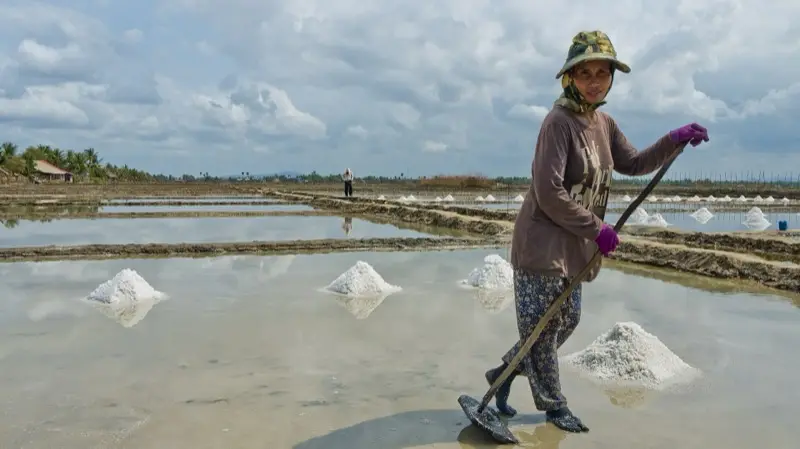
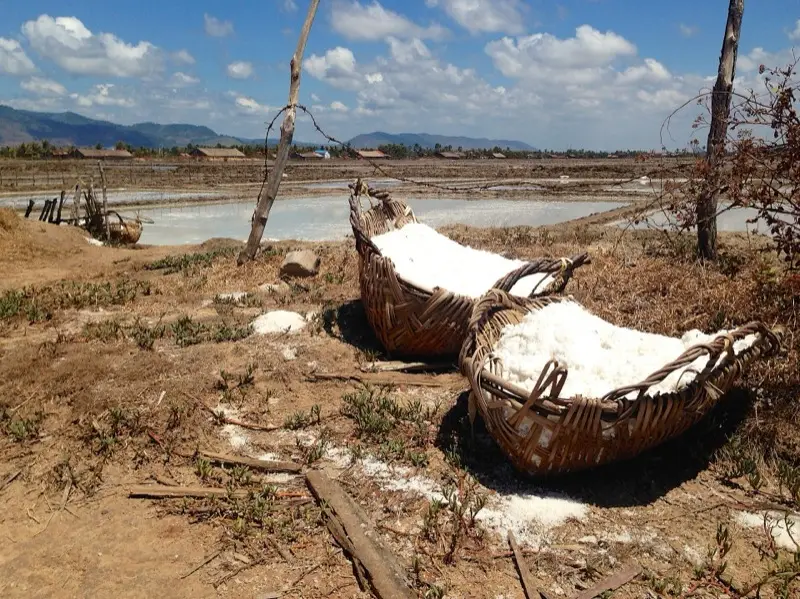
A few kilometres out of town on the road to Kep, the land flattens into a grid of shallow pans. Kampot and Kep together had nearly 4,750 hectares of them in 2021, worked by about 200 families in the local salt association, and in a good dry year they produce some 80,000 tonnes of salt.
When to go. Seawater is let into the pans around December. The harvest runs roughly from January to April or May and peaks in March and April. A hot, dry year can stretch it into June or July; early rains cut it short. Workers start around 5am, but the best moment for visitors is late afternoon, when they carry baskets of fresh salt along the dykes in low, golden light.
In the wet season, roughly May to November, the pans are flooded or idle. We won't pretend otherwise: there's no harvest to watch, but the flat water and big skies still make a good photo stop.
Etiquette. There's no fee. This is people's workplace, so ask before walking on the dykes or photographing anyone.
La Plantation pepper farm
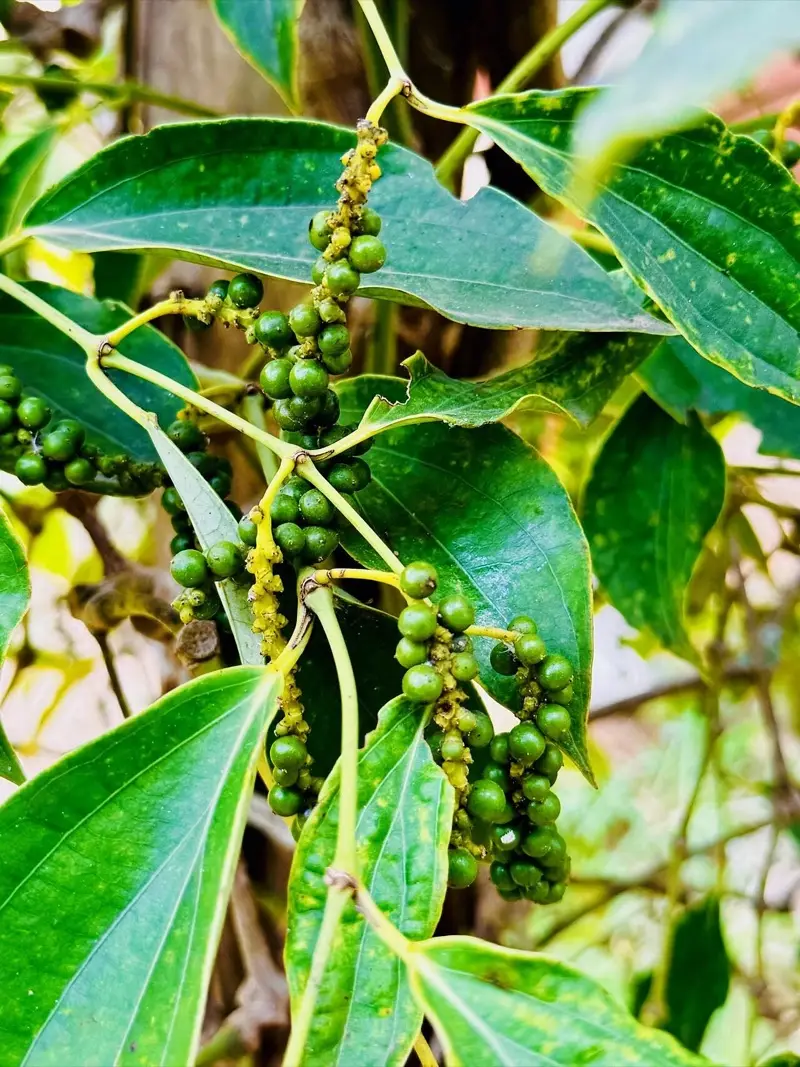
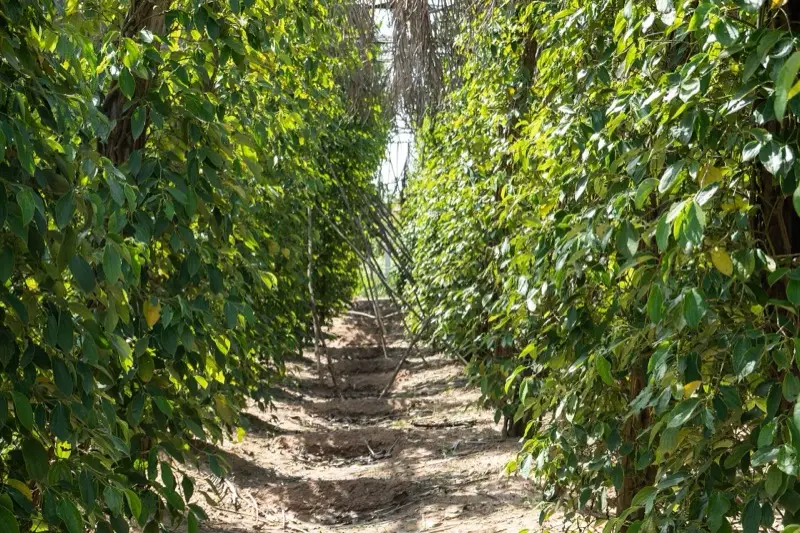
Kampot pepper has held EU Protected Geographical Indication status since 2016, and La Plantation is the farm most visitors want to see. It's out in the countryside between Kampot and Kep. You walk among the pepper vines and spice gardens, learn how green, black, red and white pepper all come from the same plant, and taste them side by side. Its official website is laplantation.com.
- Opening hours: daily from 9am to 6pm, public holidays included. The last farm visit starts at 4pm.
- Booking: from October to March, book a visiting slot online in advance. From April to September you can just turn up. The farm's own pages aren't entirely consistent about October, so if you're visiting then, book anyway.
- Cost: current listings show a small entry fee of about $2.50 per adult, issued as a voucher you can put towards the guided tour or spend at the farm. The guided tour and tasting are offered in English, French or Khmer.
- Extras: a private Sunset Tour (two hours from 3pm, ending with a cocktail at the farm's Spice Bar), a private "Secret Tour" of production, and a cooking class that must be booked at least a day ahead.
- Food: the restaurant is open 7am to 3pm, no reservation needed; try the Kampot pepper ice cream.
Some shared tours visit a different farm. BoTree, for example, also offers a free tour and tasting. If La Plantation is the one you want, ask which farm is on the itinerary.
Secret Lake (Tomnup Tek Krolar)
Next to La Plantation lies a wide, calm sheet of water among the rice fields, known locally as Tomnup Tek Krolar and on some maps as Brateak Krola Lake. Visitors call it peaceful, and it is, especially in the late-afternoon light.
Its history is the reason to come. The lake is an irrigation reservoir dug by forced labour under the Khmer Rouge in the late 1970s. Between 1975 and 1979 the regime emptied Cambodia's towns and forced people into the countryside to build dams and canals by hand, with little food, no rest and brutal punishment. An estimated 1.5 to 2 million Cambodians died during those years, and families here still carry that loss. You'll see claims online about exact numbers of workers who died here, but they come from a single unverified source, so we don't repeat them.
Go knowing the story, and treat the place with the quiet respect you would give any memorial. A local guide makes all the difference here, because none of this is obvious from the view.
Practical: there's no entry fee. The lake is fullest at the end of the rainy season, around October and November. In the dry season it shrinks and dead tree trunks show above the water.
Phnom Chhngok cave temple
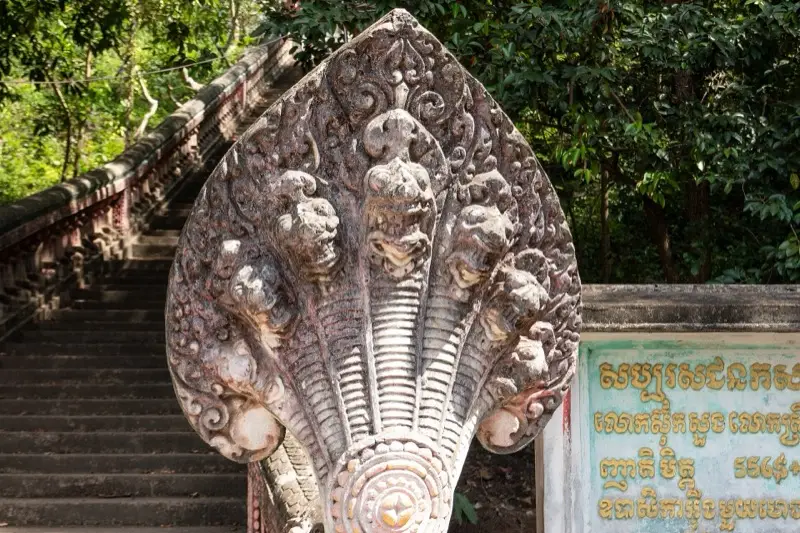
About 8 km northeast of Kampot, a limestone hill hides a 7th-century, pre-Angkorian brick temple dedicated to Shiva, built inside a cave. Sheltered from the weather, the brickwork has survived remarkably well, and a stalactite forms a natural linga.
- Getting there: leave National Road 33 about 5.5 km east of town, then follow about 6 km of bumpy road through rice fields.
- Fee: about $1–2, collected at Wat Ang Sdok at the foot of the hill.
- The climb: roughly 200 steps, then into the cave. Local kids often guide visitors for a tip of a dollar or a few.
- Time: about an hour. A second, deeper cave involves some scrambling.
- Bring: a torch or phone light, shoes with grip, and clothes covering shoulders and knees.
The ideal order of the day
Avoid walking around in the 11am–2pm heat if you can, and remember La Plantation's 4pm last visit. Two routes work well:
Morning loop (about 8am to 1pm)
- Phnom Chhngok first, while the steps are still cool.
- La Plantation, with a booked slot from October to March, and perhaps an early lunch at its restaurant.
- Secret Lake next door.
- The salt fields on the way back to town.
Afternoon loop (about 1pm to 6pm)
- Phnom Chhngok, or skip it if the heat is fierce.
- La Plantation, arriving well before the 4pm last visit.
- Secret Lake in the late-afternoon light.
- The salt fields at sunset, with workers carrying salt in harvest season.
In harvest season (January to May) we'd pick the afternoon loop for the salt fields alone. In the rainy season, when afternoon showers are common, the morning loop is the safer bet.
Ride with Seth
Seth was born and raised in Kampot, where his neighbours still work the salt. He has guided for 12 years and is rated 5.0 on Tripadvisor from 19 reviews. His Kampot Countryside Tour covers all four stops in four to five hours, in a private tuk-tuk, morning or afternoon. He can reserve your La Plantation visit for you, and he tells the Secret Lake story himself. To add Kep's crab market, see the Kampot & Kep Full Day. Message Seth for a fixed quote on WhatsApp at +855 96 694 6137. See also our Kampot tuk-tuk prices and Kampot to Kep by tuk-tuk.
FAQ
When is the salt harvest in Kampot?
Roughly January to April or May, peaking in March and April. Late afternoon is the best time to watch. From about May to November the pans are flooded or idle.
Do I need to book La Plantation?
From October to March, yes: book a visiting slot online in advance. From April to September you can turn up without a booking. The farm is open 9am to 6pm, and the last visit starts at 4pm.
How much is the entrance fee at Phnom Chhngok?
About $1–2 per person, paid at the pagoda at the foot of the hill. Bring small notes if a local child guides you.
Is Secret Lake worth visiting?
Yes, if you know its story. On its own it's a quiet, pretty lake; once you know it was dug by forced labour under the Khmer Rouge, it becomes one of the most meaningful stops in Kampot.