Kampot's rainy season runs roughly from May to October. On most days it means a hot morning and a heavy shower later in the day, not a week of grey skies. Almost everything still works: the countryside is at its greenest, Popokvil waterfall is flowing and there are fewer visitors. The salt harvest is the one thing you'll miss. Start your days early, keep Bokor flexible and have a rainy-afternoon plan, and it's a very good time to come.
On this page
How much does it actually rain?
Average monthly rainfall in Kampot (WMO, 1982–2024), compared with the dry season:
| Month | Average rain | What to expect |
|---|---|---|
| May | 196 mm | Rains begin; the hottest month, highs around 33.5 °C |
| June | 201 mm | Regular showers, often in the afternoon |
| July | 247 mm | Wetter; Bokor more often in cloud |
| August | 381 mm | The wettest month; some days rain on and off for hours |
| September | 220 mm | Wet, green and quiet |
| October | 243 mm | Still very wet; visitors start returning late in the month |
| December–February, for comparison | 21–29 mm | The dry season |
November is the changeover month, with about 128 mm. Averages hide a lot: some weeks are mostly sunny, and some bring two or three grey days in a row, especially from August to October.
What it's really like
- It's still hot. Daytime highs stay around 31–33 °C, and it's more humid than in the dry season. A shower cools things down for an hour or two.
- Mornings are your friend. The usual pattern is a clear or bright morning, clouds building after lunch and a downpour in the afternoon or evening. Not every day follows the rule, but plan as if it does.
- Dirt roads get muddy. The last stretch to Phnom Chhngok is about 6 km of rough road through rice fields, and some village tracks turn to mud after heavy rain. Main roads are fine.
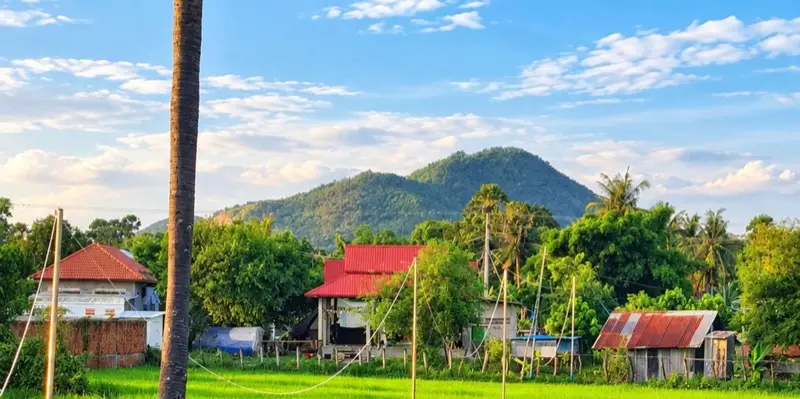
- The landscape is at its best. Rice fields go from brown to bright green, the karst hills look sharper, and the skies before a storm are spectacular.
- Bring repellent. There are more mosquitoes after rain, especially at dusk by the river.
What still works, and what doesn't
| Stop | In the rainy season |
|---|---|
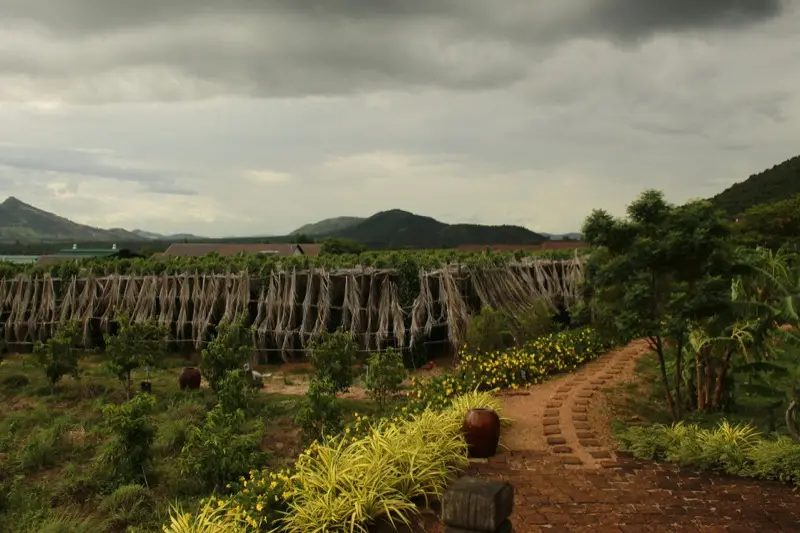
| La Plantation pepper farm | Open daily 9am–6pm, last visit 4pm. No booking needed April to September; from October, book a slot. The vines are lush, and the restaurant (7am–3pm) is a dry place to wait out a shower. |
| Secret Lake | Fills up through the season and is fullest in October and November. Go in the morning. |
| Phnom Chhngok cave temple | Works well: the temple is inside the cave. The steps and the access road can be slippery, so wear shoes with grip. |
| Salt fields | No harvest. From about May to November the pans are flooded or idle, so it's a photo stop only. |
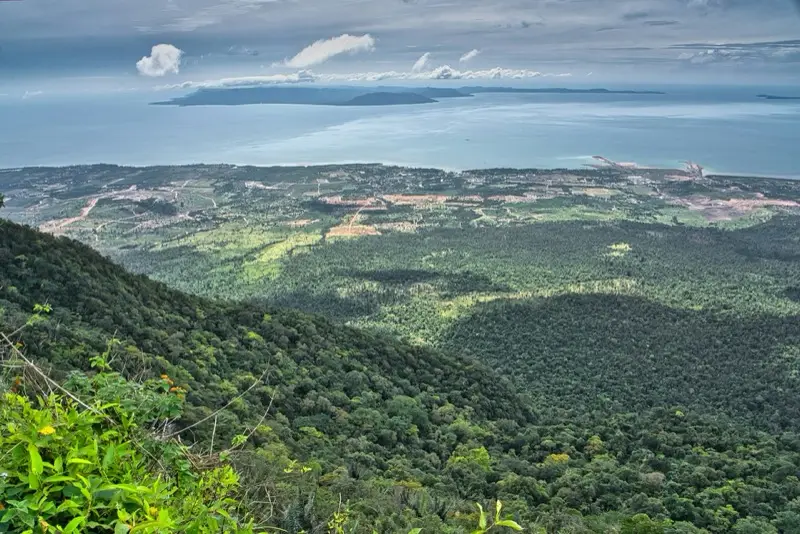
| Bokor | Popokvil waterfall is at its best, but the plateau is often foggy, wet and cold. Views are a gamble; mornings give the best odds. |
| Kep crab market | Year-round, and a long lunch under a roof is the perfect rainy-day plan. |
| Kep National Park | The trail can be slippery; do a short section in the morning. |
| Rabbit Island | Possible, but boat trips depend on the sea; check at the pier on the day. |
| River sunset boat | Runs when the weather allows. A storm can cancel the trip, but the sunsets after rain are often the best of the year. |
| Teuk Chhou rapids | More water than in the dry season, when the flow is slow. |
Why it's a good time to come
- The greenest Kampot. This is the season of the photos you've seen: green rice fields, palms and stilt houses.
- The waterfall flows. Popokvil is often a trickle in the dry season; from about May to October it's worth the stop.
- Fewer visitors. Quieter farms and viewpoints, and it's easier to find a room or a guide at short notice.
- No La Plantation booking from April to September. You can simply turn up.
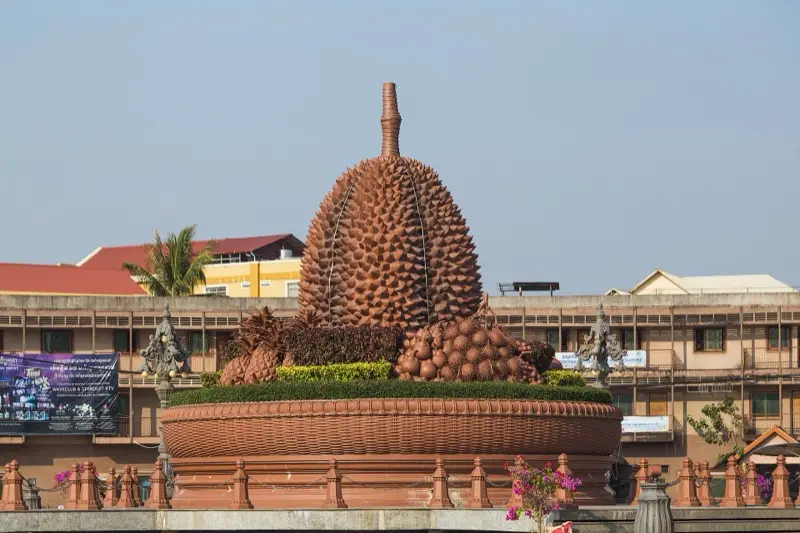
- Durian season, about mid-May to July, if you're brave.
- Secret Lake is full at the end of the season, in October and November.
What you give up: the salt harvest, the clearest Bokor views and some certainty. If seeing salt workers is the main reason for your trip, come between January and April instead. See best time to visit Kampot for every month.
A rainy-season day that works
- 08:00 Pickup in Kampot.
- 08:30 Phnom Chhngok cave temple, before the heat and before any rain.
- 10:00 La Plantation: farm tour and tasting.
- 11:30 Secret Lake next door.
- 12:30 Lunch at La Plantation's restaurant, or ride on to Kep for crab.
- 14:00 Back in Kampot before the usual afternoon showers. Rest, read, have a massage.
- 17:00 If the sky has cleared, a sunset boat on the river.
This is the morning version of the countryside loop in our Kampot countryside guide. For Bokor, pick the clearest morning of your stay and be ready to swap days.
When it really pours: a rainy-day plan
- The cave temple. Phnom Chhngok is sheltered inside, and the rice fields around it are beautiful in the rain.
- A cooking class. La Plantation runs one; book at least 24 hours ahead.
- The provincial museum on Riverside Road: about $2, open about 8–11am and 2–5pm.
- Pepper shopping at the BoTree shop on Old Market Street.
- A long crab lunch in Kep, under a roof, watching the rain on the sea.
- Cafés, a massage and a book on a riverside deck. Kampot is good at doing nothing.
More ideas in things to do in Kampot.
Tuk-tuk, scooter or car in the rain?
A tuk-tuk has a roof, and you can wait out a shower under it or at the next stop. A scooter means riding soaked on wet roads, which we wouldn't recommend if you're not used to it, and certainly not on Bokor's hairpins. For Bokor in a real downpour, a closed car is the sensible choice; our Bokor by tuk-tuk guide compares the options. For 2026 fares, see Kampot tuk-tuk prices.
What to pack
- A light rain jacket, plus a warm layer for Bokor
- Sandals or shoes with good grip that can get wet
- Quick-drying clothes
- A dry bag or zip-lock bags for your phone and passport
- Mosquito repellent
Ride with Seth
Seth was born in Kampot and has guided through 12 rainy seasons. He'll pick you up at your hotel early, keep the outdoor stops for the morning and tell you honestly if Bokor isn't worth it that day. He's rated 5.0 on Tripadvisor. The Kampot Countryside Tour is the best rainy-season choice, and the Bokor Mountain Day is the one for the waterfall on a clear morning. Message Seth for a fixed quote on WhatsApp (+855 96 694 6137).
FAQ
Does it rain all day in Kampot in the rainy season?
Usually not. The typical day has a bright morning and a shower in the afternoon or evening. Longer rainy spells happen, mostly from August to October.
Do tuk-tuk tours run in the rain?
Yes, all year. In the rainy season, tours start early to finish before the afternoon showers.
Is Bokor worth it in the rainy season?
For Popokvil waterfall and the cool air, yes. For views, it's a gamble: go on the clearest morning you have, and bring a jacket.
Can you see the salt harvest in the rainy season?
No. The harvest runs roughly January to April or May. From May to November the pans are flooded or idle.
Is October a good time to visit Kampot?
It's still one of the wettest months, but the countryside is green, Secret Lake is filling up and it's quiet. From October, book La Plantation in advance.